An Innovation Design of the Flying Vehicle Jet Engine for Energy Efficiency and Lightweight Configuration Analysis
Keywords:
Flying vehicle, VTOL (Vertical Take Off Landing), flap design, jet engine, energy efficiency,, lightweight aircraft, CFD simulation, aerodynamic analysisAbstract
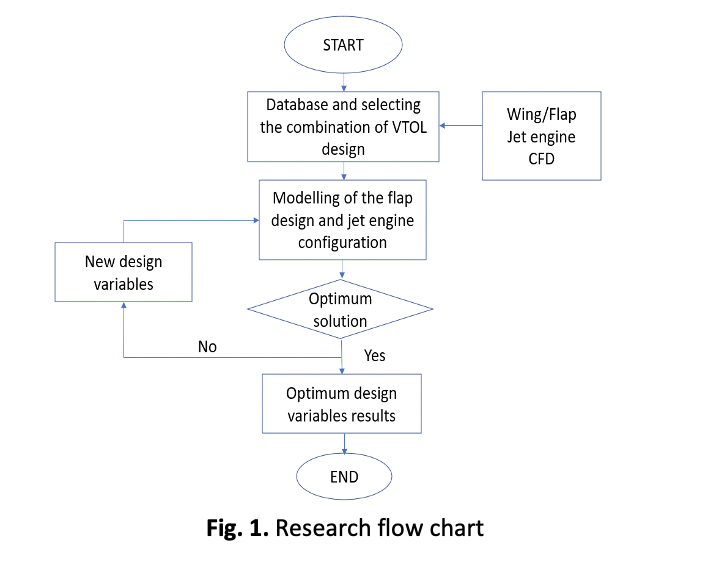
The development of lightweight flying vehicles has become increasingly important due to the growing demand for efficient emergency VTOL (Vertical Take Off Landing) transportation and advanced aviation mobility systems. This research focuses on the innovation of flap design integrated with a jet engine system to improve the aerodynamic efficiency and flight endurance of a lightweight flying vehicle. The proposed flying vehicle is capable of carrying a payload of up to 780 kg with a maximum speed of 425 km/h. The study involved literature review, aerodynamic analysis, wing and flap configuration design, Computational Fluid Dynamics (CFD) simulation, and design validation processes. The flying vehicle was designed using lightweight materials such as carbon fiber and aluminum with jet engine formation to improve flight performance and reduce energy consumption. The simulation and analysis results demonstrated that the proposed flap design improved flight endurance by approximately 38% compared to conventional designs. Furthermore, the proposed concept shows strong potential for emergency response applications such as ambulance services, and rescue operations, especially in reducing delays caused by traffic congestion. This research contributes to the advancement of energy-efficient flying vehicle jet engine technology and future aerospace transportation systems in Malaysia.